

Property Governors Team
Property Management Insights
When the Lease Ends but the Tenant Is Still Paying
When periodic increases are already agreed, many managers prefer to let good tenants keep paying on current terms instead of inventing a new lease every year.
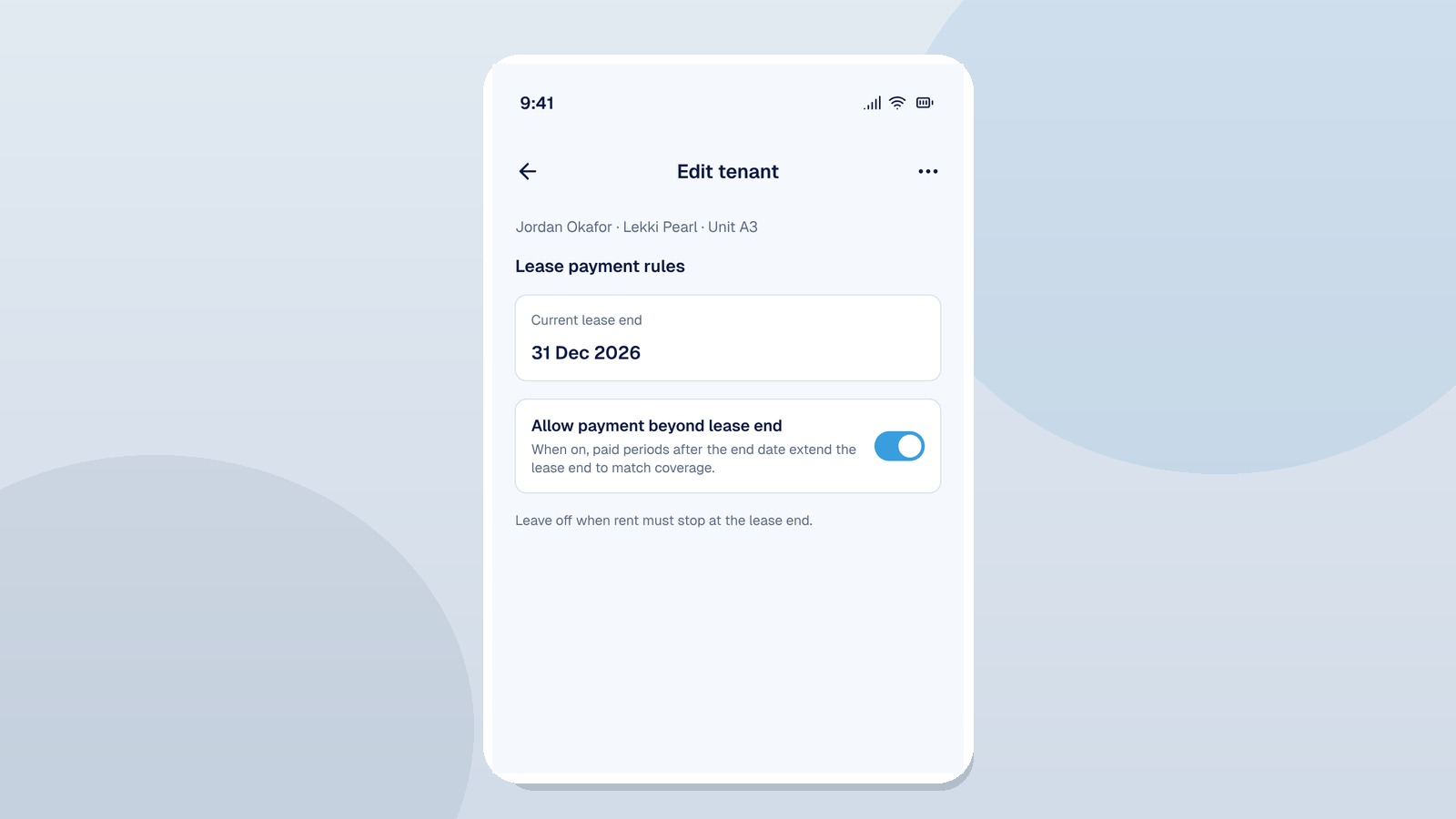
Lease end dates look decisive in a contract. In a living portfolio they are often just a calendar marker. The tenant is still in the unit. The owner is still happy collecting rent. Renewal talks are open, or everyone means to renew and the paperwork is simply late.
Then a payment arrives.
If your records treat “lease ended” as “nothing more can happen,” someone invents a workaround. They nudge the end date by hand. They open a temporary lease with dates that never existed in a meeting. They take the money offline and leave the system showing an expired tenancy. Weeks later an owner asks for a clean history, and you are reconstructing the story from WhatsApp.
The Real Problem Is Not the Stay
People staying past a paper end date is common. The problem is when the money and the contract stop telling the same story.
Owners do not usually ask for philosophy. They ask:
- Are they still paying?
- Through when?
- Under what agreement?
Tenants care about a different version of the same thing: can I pay without being told the system will not accept it, and will that payment actually count?
A process that cannot answer those questions turns a normal holdover into a credibility problem.
Quiet Edits Create Quiet Lies
Pushing the end date forward every time cash arrives looks tidy. It erases the fact that the original term ended, and it trains staff to treat the contract as a slider rather than a record.
Opening a fake follow-on lease is worse. Payment history fragments. Staff argue about which lease a transfer belongs to. At renewal you cannot tell what was already covered.
Leaving the lease expired while money sits in “miscellaneous” is how you lose months of coverage in the narrative, even if the bank balance looks fine.
The common thread: the books are being forced to fit the workflow, instead of the workflow fitting the real situation.
What a Clean Holdover Looks Like
A cleaner approach starts with an intentional decision, not an improvisation after the alert lands.
For some tenants, payment past the lease end should be allowed because continued occupancy and continued rent are what everyone wants. For others, the end date should be hard: no more rent periods, pressure toward exit or a proper new agreement.
That choice belongs at the tenancy level. One building can hold both kinds of situations.
When continued payment is allowed and rent is taken for periods after the old end date, the coverage should move with the money. If they pay through March, the agreement’s end should catch up to that coverage. The ledger and the term stay aligned. You are not inventing a renewal ceremony. You are refusing to leave paid time hanging outside the contract.
When continued payment is not allowed, staff should stop at the end date. That clarity protects owners who want vacant possession pressure, and it stops tenants from assuming that paying forever equals staying forever.
Why Managers Often Prefer Current Terms
In practice, many managers would rather let a good tenant keep paying than open a brand-new lease every anniversary. Especially when the periodic increase is already written into the agreement and still being honored.
A lot of “renewals” are really just more time on the same deal. Nobody renegotiated deposits, special conditions, or the base structure. The rent rise for the next year was already agreed as part of the schedule. Teams still invent a fresh lease because the spreadsheet only knew one flat rent figure, and the old end date felt sacred.
If the lease already carries an automatic rent increase, later periods already know what they should cost. Extending on current terms, or allowing that tenant to keep paying past the end date so coverage and the end date move together, is often what managers prefer. You are continuing the agreement you already have.
A new lease still matters when something material changes: a different base rent than the schedule implies, a new structure, conditions the tenant must accept, or an owner decision that is not “same terms, more time.”
Holdover, Extension, and New Terms
Managers get tangled when collecting during the gap feels like renewal, so they skip naming what they are doing.
They are different jobs:
- Continue on current terms when the economics are already settled, including any increase schedule baked into the lease. Holdover or a deliberate extension keeps rent and coverage honest without a fresh acceptance cycle.
- Propose new terms when the deal itself is changing. That needs agreement, not silence treated as consent.
Neither path should be assumed. You choose it per tenancy, with the owner’s preference in mind.
When you do move into something new, start from how far they have already paid. Do not charge twice for months already covered, and do not invent a higher rent by rewriting history.
Property Governors lets you allow payment beyond lease end per tenancy so coverage and the end date stay aligned when you choose that path, and supports automatic rent increase on the lease so later periods can honor the schedule without rewriting the deal by hand. Read the holdover guide.
Ready to simplify property management?
See how Property Governors can help you manage your rental properties more effectively.