

Property Governors Team
Property Management Insights
Surprise Repair Bills Are How Managed Portfolios Lose Trust
Some owners want a say before work starts. Others hired you to run the building. The relationship fails when every repair uses the same unspoken rule.
The repair was reasonable. The tenant was relieved. The vendor did fine work. None of that matters when the owner sees the invoice for the first time in a month-end report and asks a question you cannot answer well: who approved this?
Managed property is a trust business that happens to involve plumbers. Rent collection can be perfect and the relationship still frays if spend on the building feels invisible.
Two Kinds of Owners, One Bad Default
In the same portfolio you often have:
- Owners who want speed. They hired a manager so they would not live inside every maintenance thread.
- Owners who want a brake. They will accept urgency for a burst pipe, but not a discretionary job that could have waited for a yes.
If your default is “just fix it,” the second group feels blindsided. If your default is “ask everyone every time,” the first group feels managed by committee, and tenants wait while a message sits unread.
The failure is not choosing the wrong owner type. It is forcing both through the same unspoken process.
WhatsApp Approvals Age Badly
Chat feels like control until you need proof.
The “ok” is buried under other messages. The quote in the thread does not match the final invoice. A different staff member continues the job without seeing the approval. The owner remembers authorizing one figure. Your vendor billed another.
At that point you are not defending the repair. You are defending your memory.
Approvals that matter need to live with the job: what was reported, what it might cost, who said yes or no, and what happened next. Otherwise transparency is a performance you put on after the money is gone.
Trust Is the Outcome Owners Actually Buy
Owners rarely wake up wanting a settings screen. They want:
- No mystery spend on their buildings
- A clear trail when they asked to be involved
- Enough visibility that they do not have to chase you for status
Managers want something adjacent:
- Room to operate for owners who delegated
- A real pause for owners who did not
- One maintenance process, not a side culture of “remember to call Mr. Okonkwo”
That is the product of a good policy: different relationships, same operational spine.
Make the Rule Explicit, Then Keep It Boring
The useful conversation happens at onboarding, not after the invoice:
Do you want to approve maintenance before work starts on your properties, or should we run repairs and keep the record visible?
Some owners will say approve. Some will say run it. Both answers are fine. What is not fine is discovering the preference during a dispute.
Once the rule exists, follow it. Emergency stabilization can still come first. Discretionary work should not sneak past a promised gate. Completed jobs should still be visible in the same place the decision was made, so the story does not split between chat, email, and a spreadsheet of expenses.
What Managers Still Own
An approval pause is not an abdication of judgment. You still triage urgency, get a quote when the spend needs a number, pick the worker, and close the job. Owners who approve are not taking over your vendor bench. They are keeping cost control without inheriting your operating system.
That boundary is what keeps managed portfolios scalable. Hands-on owners get a voice. Delegating owners get speed. Tenants still get repairs that move.
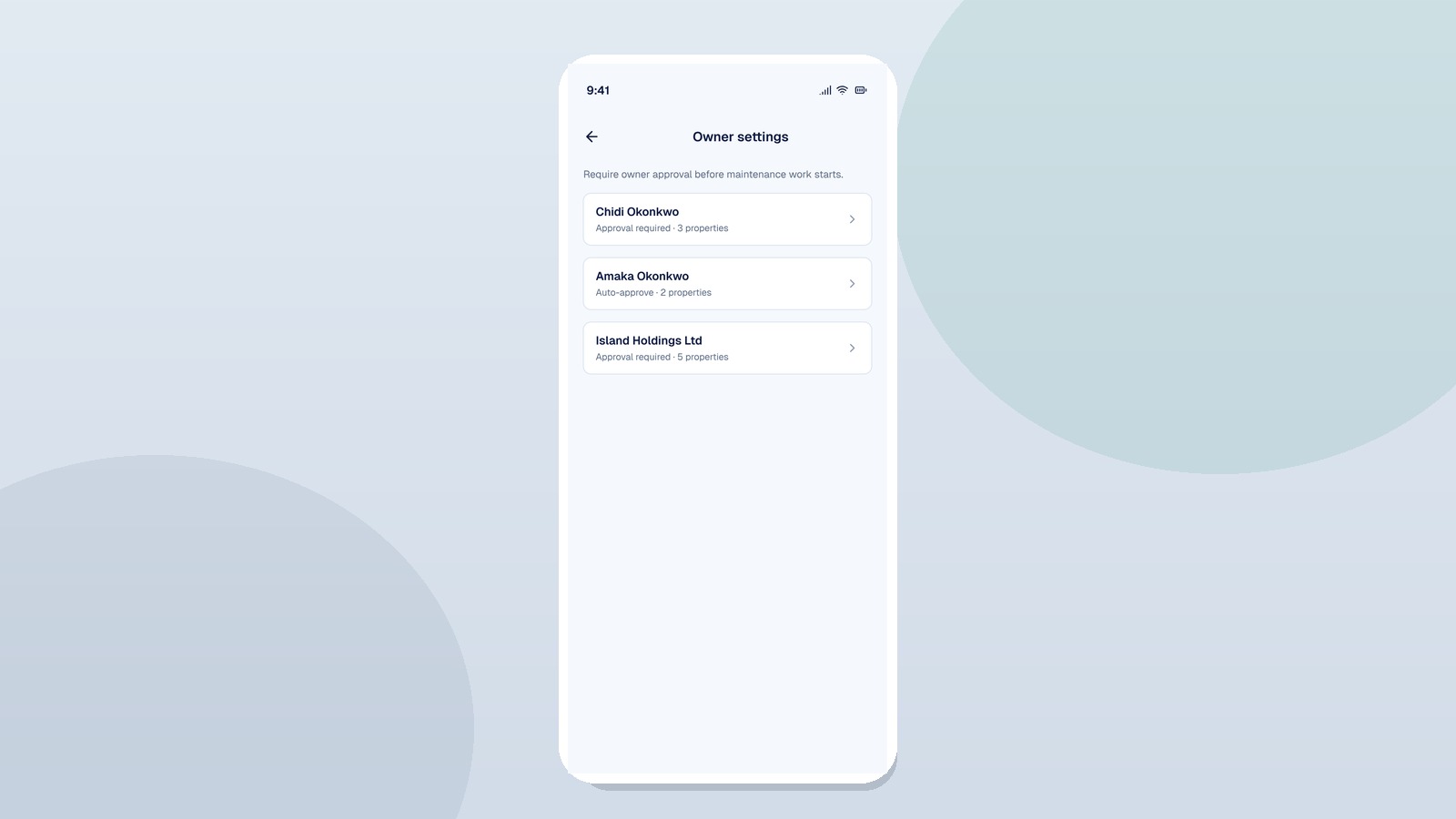
Property Governors lets managers require maintenance approval per owner when they want that gate, and leave it off when they do not. Approvals sit on the request with the rest of the job. Read the owner settings guide.
Ready to simplify property management?
See how Property Governors can help you manage your rental properties more effectively.